Sparse Coding–Driven Deep Learning for Robust Emotional State Recognition from Multichannel Speech
Keywords:
Sparse coding, Deep Learning, Neural network, CNN, KT Emotion recognitionAbstract
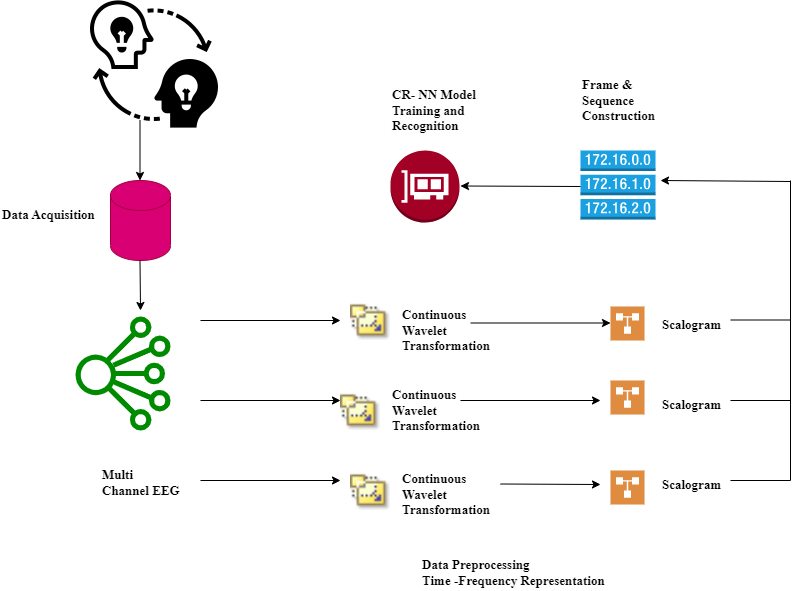
Human emotions can be read from a person's face, words, actions (gesture/posture), or even their heart rate. Due to recent advancements in Machine Learning and data fusion, we can now equip computers with the ability to comprehend, identify, and evaluate human sentiment. Emotional state recognition and Stress disorder diagnosis from speech signals have both been concerns for the recent decade. An increasingly useful computer-aided method for identifying emotional disorders is emotion recognition based on multichannel neurophysiologic inputs, a difficult pattern recognition challenge. Correlation information between channels and frequency components is underutilized by conventional fusion techniques. This paper reveals that deep neural networks trained on emotion data can align with prior domain knowledge and acquire representations that are more accurate than those obtained using hand-crafted techniques. Emotional state identification was the focus of this dissertation, which develops the proposed model named Sparse Coding Technique-Deep Learning (SCT-DL) network models. This is done through two methods named the Convolutional-Recurrent Neural Network (CR-NN) which is a deep learning model that can extract task-related characteristics, extract correlated data between channels and incorporate the contextual information gained from this analysis. Due to the complexity of deep belief networks, limited data sets such as the voice database are incompatible with this type of model. Hence the second method named Knowledge Transmission (KT) which is implemented to deal with the issue of limited data. The purpose is to enhance learning by drawing information from multiple source tasks and applying it to a single target activity. The proposed models have statistically and experimentally been proven to be more effective than most state-of-the-art techniques currently available for recognizing emotional states.
Downloads
Published
Issue
Section
License

This work is licensed under a Creative Commons Attribution-NonCommercial 4.0 International License.
This work is licensed under a Creative Commons Attribution-NonCommercial 4.0 International License. You are free to share and adapt the material, but only for non-commercial purposes. You must give appropriate credit to the author(s).