Biohybrid–AI Marine Sensors for Ocean Health Monitoring under Climate Stress: A Systematic Review
Keywords:
AI-driven sensing, Biohybrid sensors, Climate resilience, Marine ecosystems, Ocean health monitoring, Smart biomaterials.Abstract
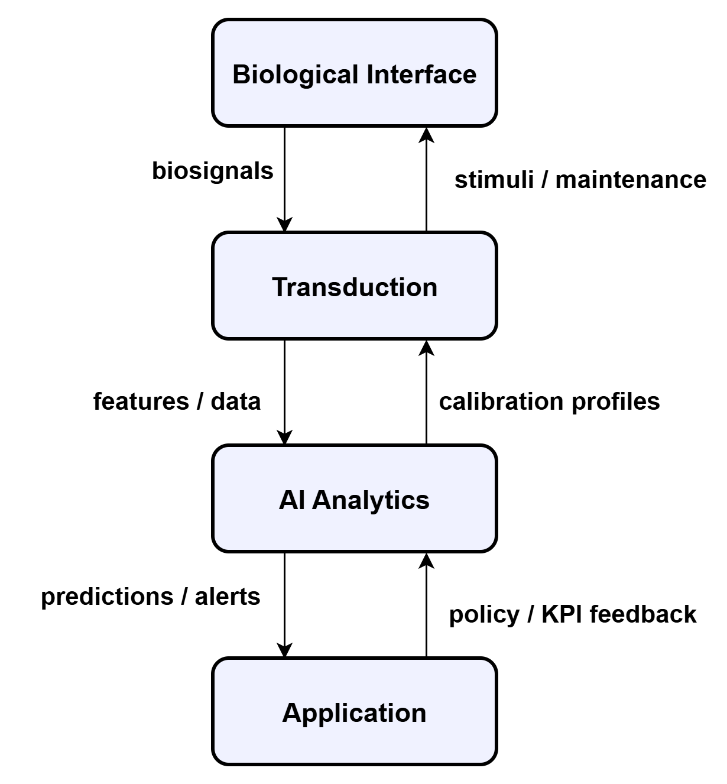
Oceans stabilize climate, carbon cycling, and global biodiversity; however, increasing anthropogenic stresses such as warming, acidification, and deoxygenation are harming marine stability. Continuous high-resolution monitoring is essential, yet traditional sensors face issues with biofouling, calibration drift, and low ecological sensitivity. This study aims to review biohybrid marine sensors that integrate biological components with engineered materials and artificial intelligence models for adaptive, long-term ocean health monitoring. A systematic review was conducted in IEEE Xplore, ScienceDirect, SpringerLink, MDPI, and Scopus (2010-2025) based on PRISMA-2020. Research was categorized into biological detection, artificial intelligence, architecture, and material and functional engineering, as well as climate-stress systems. The most sensitive and stable microbial and biofilm-based sensors, along with ecologically specific algal and coral environments, were highlighted. Models using hybrid CNN-LSTM and reinforcement learning achieved 15-25 percent higher interpretive accuracy. Nanostructured composite materials made from polymers and carbon improved biocompatibility and antifouling capabilities by over 20 times. Biohybrid AI-enabled sensors show great potential for autonomous and adaptive ocean sensing, but challenges remain regarding biological viability, standardization, energy independence, and ethical use.
Downloads
Published
Issue
Section
License

This work is licensed under a Creative Commons Attribution-NonCommercial 4.0 International License.
This work is licensed under a Creative Commons Attribution-NonCommercial 4.0 International License. You are free to share and adapt the material, but only for non-commercial purposes. You must give appropriate credit to the author(s).