A Comprehensive Review of Agentic AI Systems for Autonomous Reasoning, Planning, Memory, and Multi-Agent Collaboration
Keywords:
Agentic AI, Autonomous Reasoning, Chain-of-Thought, Planning, Memory Augmentation, Multi-Agent Systems, Large Language Models, Tool Use, Retrieval-Augmented Generation.Abstract
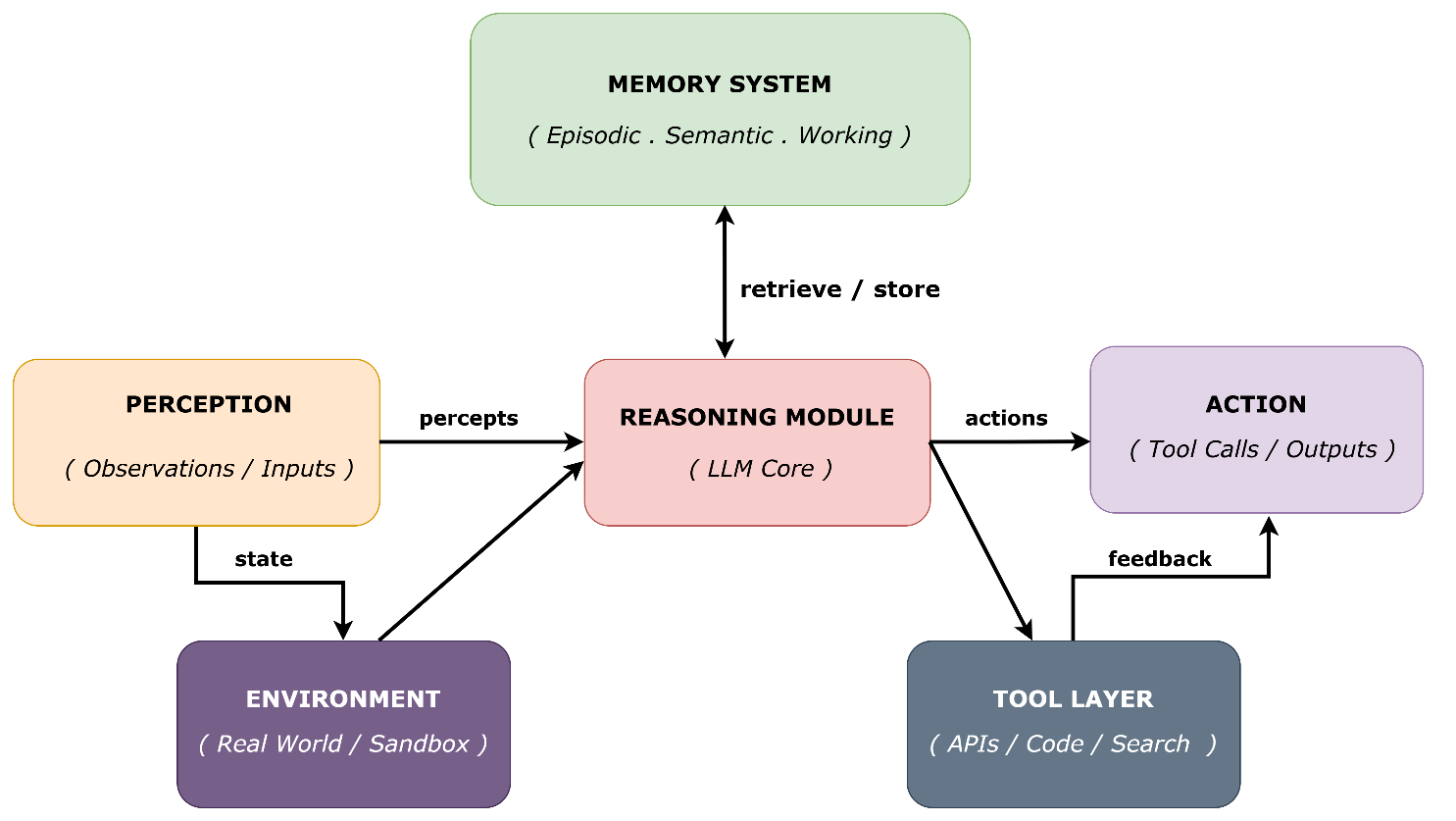
Agentic AI is qualitatively different from the prevailing models of static planning algorithms since it allows a computational system to independently think and consider long-term plans, memorize and access the contextual memory, and dynamically coordinate with peer cooperation agents. This paper provides a comprehensive review of the key principles, theories and empirical developments that collectively constitute the modern agentic AI landscape. After a conceptual discussion of the difference between reactive paradigms and agentic paradigms, studies are reviewed regarding the vital key cognitive capabilities of these systems, such as chain-of-thought and tree-of-thought reasoning, planning, memory and sensory representations as short- and long-term memory, and the emergent dynamics of coordination behaviour in multi-agent frameworks. ReAct systems, AutoGPT, BabyAGI, MetaGPT, and CAMEL are analyzed and placed in the continuum of work done by autonomous agents in the broader context of the intellectual history. Aspects of challenges regarding hallucination, cascading errors, scalable communication and alignment are discussed and a research roadmap is suggested. Seven selections of pointed references add to the topic of suggestions and give it a grounding in modern scholarship.
Downloads
Published
Issue
Section
License

This work is licensed under a Creative Commons Attribution-NonCommercial 4.0 International License.
This work is licensed under a Creative Commons Attribution-NonCommercial 4.0 International License. You are free to share and adapt the material, but only for non-commercial purposes. You must give appropriate credit to the author(s).