Symptom-Based Disease Prediction Using Machine Learning Algorithms: Enhancing Diagnostic Accuracy for Multiple Diseases
DOI:
https://doi.org/10.70162/mijarcse/2024/v10/i1/v10i108Keywords:
Machine Learning, Disease Prediction, Healthcare, Symptom-based Diagnosis, Naive Bayes, Random ForestAbstract
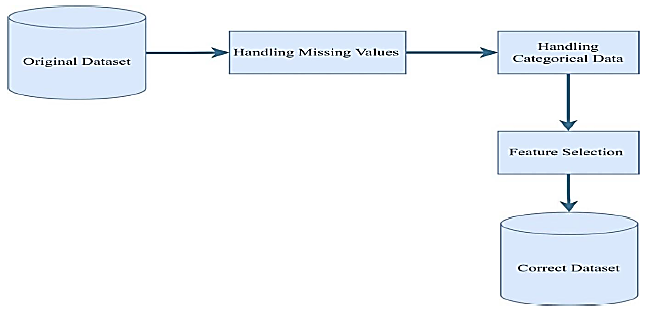
This research paper focuses on applying machine learning algorithms to predict diseases based on patient-reported symptoms, aiming to enhance diagnostic accuracy and speed. The objective of the study is to develop a robust system that can predict diseases such as diabetes, malaria, jaundice, dengue, and tuberculosis using machine learning models like Naive Bayes, K-Nearest Neighbors (KNN), Decision Trees, and Random Forest. Current diagnostic approaches often suffer from delays and inaccuracies due to reliance on human expertise and the absence of advanced diagnostic tools, particularly in low-resource settings. This leads to misdiagnoses, especially for diseases with overlapping symptoms. The methodology includes data preprocessing steps such as handling missing data, applying Synthetic Minority Oversampling Technique (SMOTE) for class balancing, and feature encoding to prepare the dataset. Several machine learning models were trained and tested on this processed data, and their performance was evaluated using metrics like accuracy, precision, recall, and F1-score. The Random Forest model achieved the highest accuracy of 98.3%, demonstrating its effectiveness in symptom-based disease prediction. However, the system faces limitations, such as its reliance solely on symptom data and potential challenges in scaling and generalizing across diverse populations. The study concludes that incorporating clinical data, such as lab results and patient history, and exploring deep learning techniques could significantly improve future models. This research opens up possibilities for integrating machine learning-based diagnostic systems into real-world healthcare environments, particularly in resource-limited areas.
Published
Issue
Section
License

This work is licensed under a Creative Commons Attribution-NonCommercial 4.0 International License.
This work is licensed under a Creative Commons Attribution-NonCommercial 4.0 International License (CC BY-NC 4.0). You may share and adapt the work for non-commercial purposes with appropriate attribution. For more details, visit https://creativecommons.org/licenses/by-nc/4.0/.